


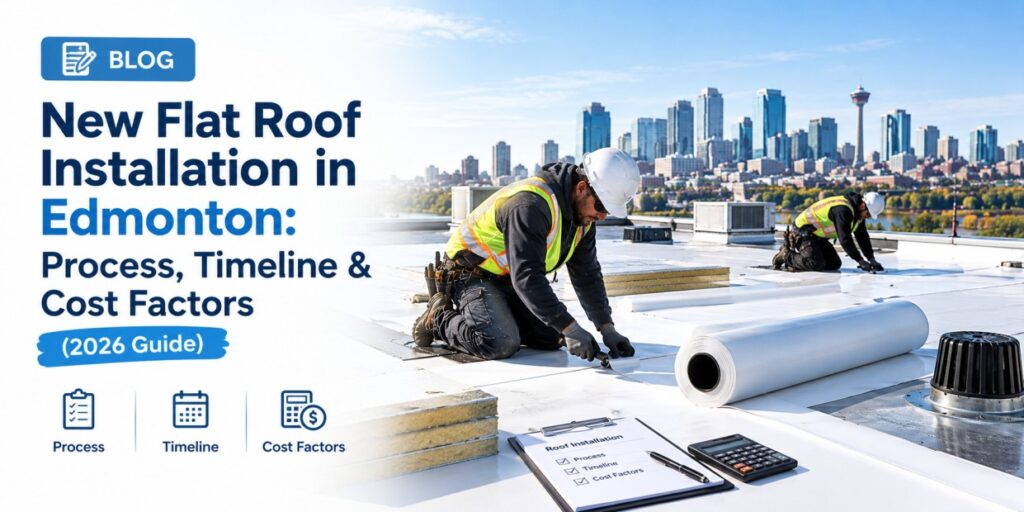
A new flat roof is one of the biggest investments you’ll make in a commercial building. Whether it’s new construction, an addition, or a full tear-off and rebuild, the installation decides how long your roof lasts.
In Edmonton, installation quality matters even more. Freeze-thaw cycles, heavy snow and summer hail expose shortcuts fast. A roof that would last 25 years somewhere milder can start leaking within five if the insulation, drainage or flashings are done wrong.
This guide walks you through the full installation: each step, which systems suit Edmonton buildings, how long the job takes, and what drives the price.
Quick Answer: How Is a Flat Roof Installed?
A commercial flat roof installation in Edmonton usually follows 8 steps:
- Roof assessment and system design
- Structural and snow load review
- Permits and scheduling
- Deck preparation
- Vapour retarder installation
- Insulation and tapered slope for drainage
- Membrane installation (base and cap sheet for SBS torch-on)
- Flashings, drains, final inspection and warranty registration
For a typical mid-sized commercial building, the on-roof work usually takes a few days to two weeks, depending on size, weather and complexity.
Why Installation Quality Matters More in Edmonton
Most flat roof failures in Edmonton don’t come from bad materials. They come from installation problems like these:
- Poor drainage design. Without tapered insulation, water ponds, freezes and stresses the membrane. See our guide to ponding water on commercial flat roofs.
- Weak or missing vapour control. Warm indoor air carries moisture into the roof. In Edmonton winters it condenses and soaks the insulation from below.
- Rushed flashings. Most leaks start at edges, curbs, drains and penetrations, not in the middle of the roof.
- Wrong system for the building. A roof with heavy rooftop equipment and service traffic needs a tougher membrane than a simple storage building.
Done right, the installation prevents all four.
Step-by-Step: The Flat Roof Installation Process
Step 1: Roof Assessment and System Design
For a re-roof, the contractor inspects the existing roof, checks for trapped moisture, and looks at the deck condition. For new construction, they review drawings with the builder or architect.
Either way, this is where the key decisions get made:
- Which membrane system to use
- How much insulation is needed
- Where water will drain
- How rooftop equipment will be handled
Step 2: Structural and Snow Load Review
Edmonton roofs carry significant snow loads, and drifts pile up against parapets and rooftop units. Before adding a heavier system or extra insulation, the building’s structure must be confirmed to handle the load.
This matters most for older buildings and roofs with new equipment added. Learn more in Snow Load & Ice Dams on Edmonton Commercial Flat Roofs.
Step 3: Permits and Scheduling
New construction and projects involving structural changes typically need City of Edmonton permits. Requirements for straight re-roofing depend on the scope, so your contractor should confirm them before work starts.
Scheduling also matters. Late spring through early fall is the ideal installation window in Edmonton. Torch-on systems can be installed in cooler temperatures with the right precautions, but most projects are planned for the warmer months.
Step 4: Deck Preparation
The deck is the base everything else sits on, whether it’s steel, concrete or wood. It must be clean, dry, sound and properly fastened. On re-roofs, any rotted or corroded deck sections are replaced at this stage. Covering a damaged deck with a new roof is one of the most expensive mistakes a building owner can make.
Step 5: Vapour Retarder
A vapour retarder goes down over the deck to stop warm, moist indoor air from reaching the insulation. In Edmonton’s cold climate, this layer is critical. It’s especially important for buildings with high indoor humidity, such as restaurants, gyms, pools and manufacturing spaces.
Step 6: Insulation and Tapered Slope
“Flat” roofs aren’t truly flat. They need a slight slope to move water to drains and scuppers. That slope is usually built with tapered insulation, which does two jobs at once: it improves energy efficiency and prevents ponding water.
Insulation must also meet current energy code requirements for Edmonton’s climate zone. A cover board is often installed on top to protect the insulation and give the membrane a solid surface. Read more in our Commercial Roof Insulation Guide.
Step 7: Membrane Installation
This is the waterproofing layer. For a 2-ply SBS torch-on system, the most common choice in Edmonton, it goes down in two parts:
- Base sheet: the first waterproofing layer, adhered to the substrate
- Cap sheet: the top layer, torched onto the base sheet, with a granulated surface that protects against UV and hail
Two plies give you two layers of waterproofing. If the top layer is damaged, the base sheet still protects the building. For TPO or EPDM, the membrane is mechanically fastened, adhered or ballasted, and the seams are heat-welded (TPO) or taped (EPDM).
Learn more: Torch-On SBS Roofing in Edmonton
Step 8: Flashings, Drains, Inspection and Warranty
The final stage covers the details where most leaks start:
- Parapet walls and roof edges
- Rooftop unit curbs, vents and pipe penetrations
- Drains, scuppers and overflow outlets
- Walkway pads for HVAC service routes
A final inspection confirms everything meets specification. Then the manufacturer and workmanship warranties are registered. Keep all the paperwork, because you’ll need it for any future claim. See our Commercial Roof Warranty Guide.
Choosing the Right Flat Roof System for an Edmonton Building
| System | Typical Lifespan* | Best For | Key Strength |
|---|---|---|---|
| 2-ply SBS torch-on | 20–30 years | Most commercial & industrial buildings | Two layers of protection, excellent hail and cold-weather performance |
| TPO | 20–30 years | Large warehouses, simple roof layouts | Reflective, cost-effective on big areas |
| EPDM (rubber) | 20–30 years | Simple roofs with few penetrations | Flexible in extreme cold |
*Lifespans depend on installation quality, drainage and maintenance.
For a full comparison, read SBS vs TPO vs EPDM Roofing in Edmonton.
How Long Does a Flat Roof Installation Take?
Most commercial flat roof installations in Edmonton take a few days to two weeks of on-roof work. Larger industrial roofs can take longer. The timeline depends on:
- Roof size and number of penetrations
- Whether an old roof has to be torn off first
- Deck repairs found during tear-off
- Weather, since rain, high wind and extreme cold pause work
- Material and equipment delivery times
Planning and permits add time before work starts, so begin the process well before your target installation season.
What Affects the Cost of a New Flat Roof in Edmonton?
Every roof is priced individually, but these factors have the biggest impact:
- Roof size and shape. Larger roofs cost less per square foot. Complex layouts cost more.
- Membrane system. SBS, TPO and EPDM differ in material and labour costs.
- Insulation and tapered design. More insulation and drainage correction adds cost but saves on energy and repairs.
- Tear-off and disposal. Removing old layers, especially heavy tar and gravel, adds labour and disposal fees.
- Deck repairs. Hidden deck damage is the most common surprise cost on re-roofs.
- Rooftop equipment. Each unit, curb and penetration needs its own flashing work.
- Access and safety requirements. Building height, crane needs and fall protection all affect price.
For current price ranges, see our Commercial Roof Replacement Cost Guide.
6 Installation Red Flags to Watch For
- A quote that doesn’t name the membrane system, insulation type or thickness
- No mention of drainage or tapered insulation on a roof with ponding
- A contractor who won’t inspect the deck during tear-off
- “Roof-over” recommendations without checking for trapped moisture
- No written workmanship warranty
- Crews without torch safety training or proper WCB coverage
Before you sign, read What to Ask Before Hiring a Commercial Roofing Contractor.
Frequently Asked Questions
What is the best flat roof for a new commercial building in Edmonton?
For most commercial buildings, a 2-ply SBS torch-on system is the most reliable choice. It offers two layers of waterproofing and handles Edmonton’s cold, snow and hail very well. TPO can suit large warehouses with simple layouts.
When is the best time to install a flat roof in Edmonton?
Late spring to early fall offers the best conditions. Torch-on systems can be installed in cooler weather with precautions, but warm, dry weather gives the most predictable schedule.
Can a new roof be installed over my existing roof?
Sometimes. It depends on how many roof layers already exist, whether the insulation is dry, and whether the structure can carry the extra weight. A moisture survey should always come first. Covering a wet roof traps the problem instead of solving it.
How long will my new flat roof last?
A well-installed SBS, TPO or EPDM roof typically lasts 20–30 years in Edmonton. Regular inspections and maintenance help it reach the top of that range. See our Commercial Roof Maintenance Program.
Do I need a permit for a new flat roof in Edmonton?
New construction and structural work typically require City of Edmonton permits. For straight re-roofing, requirements depend on the scope of work. A professional contractor will confirm and arrange what’s needed.
What warranty comes with a new flat roof?
Most new roofs come with a manufacturer’s material warranty and a contractor’s workmanship warranty. Coverage length and terms vary by system and installer, so get both in writing.
Plan Your New Flat Roof with Edmonton Specialists
Silverback Torch-On Systems installs commercial and industrial flat roofs across Edmonton, from new construction to full tear-off re-roofs. We specialize in 2-ply SBS torch-on systems designed for Edmonton’s climate, with proper drainage, insulation and flashing details built in from day one.
Explore our services: Commercial Flat Roofing | Commercial Re-Roofing | Commercial Roof Inspection