


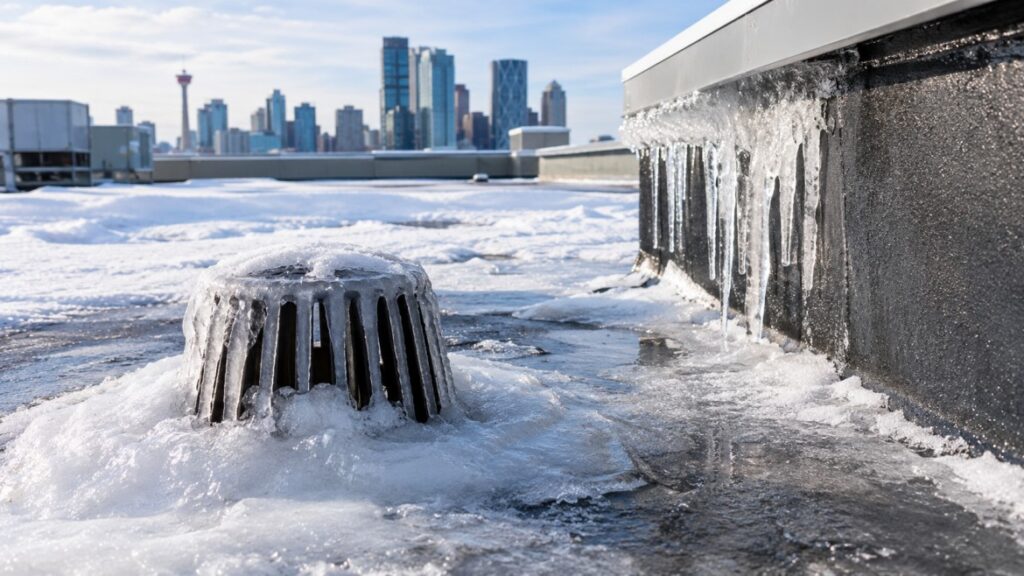
Every flat roof depends on one simple thing: water has to leave the roof. In summer, that’s easy. In an Edmonton winter, it’s one of the biggest challenges a commercial roof faces.
When roof drains, scuppers or downspouts freeze, meltwater has nowhere to go. It ponds on the roof, refreezes, and builds heavy layers of ice. Then it works its way into seams and flashings until it finds a way inside the building.
Frozen roof drains are behind many winter leaks, ice hazards at building entrances, and some of the most dangerous roof loads of the season. This guide explains why commercial roof drains freeze in Edmonton, the warning signs to watch for, and the steps that keep water moving all winter.
Quick Answer: Why Do Commercial Roof Drains Freeze?
Commercial roof drains freeze when meltwater reaches the drain and refreezes before it can leave the roof. This usually happens during freeze-thaw cycles. Daytime sun or heat escaping from the building melts snow, and the water flows toward the drain. Then temperatures drop and it refreezes in the drain, scupper or downspout.
Exterior drainage like scuppers and downspouts, drains above unheated spaces, and drains blocked by debris are the most likely to freeze.
How Roof Drains Freeze: The Winter Cycle
Understanding the cycle helps you stop it:
- Snow builds up on the roof. Drifts often collect near parapets, rooftop units and lower roof areas.
- Snow melts unevenly. Sun on exposed areas, or heat escaping from the building, melts snow even when air temperatures are below zero.
- Meltwater flows toward the drains. It reaches the drain, the scupper or the edge of the roof.
- Temperatures drop. Water freezes in the drain opening, inside the drain line, at the scupper outlet, or in exterior downspouts.
- The blockage grows. Every melt adds another layer of ice, and the drain stays closed for longer each cycle.
In Edmonton, this cycle can repeat dozens of times through late fall, winter and early spring.
Which Drains Freeze Most Often?
Not all roof drainage freezes equally:
| Drainage Type | Freeze Risk | Why |
|---|---|---|
| Internal roof drains over heated spaces | Lower | Heat from the building below helps keep them open |
| Internal drains over unheated spaces (warehouses, canopies, parkades) | Higher | No heat below, so drain lines get as cold as outside air |
| Scuppers through parapet walls | High | Fully exposed to wind and cold |
| Exterior downspouts and leaders | Very high | Water refreezes inside the pipe before it reaches the ground |
| Drains blocked by debris | Very high | Leaves, gravel and sediment slow water down, so it freezes faster |
Warning Signs Your Roof Drains Are Freezing
Watch for these signs, especially during the first thaws after cold snaps:
- Large icicles hanging from scuppers, roof edges or downspouts
- Ice sheets or patches on sidewalks, entrances or loading areas below downspouts
- Water overflowing the roof edge or parapet during thaws
- Ice buildup visible around drains from roof access points
- Leaks during warm spells, especially near drains, parapets or rooftop units
- Gurgling or no flow from downspouts during a thaw when water should be draining
- Ponding meltwater that stays on the roof for days
If you see these signs, don’t send staff onto an icy roof to investigate. Call a commercial roofing professional.
Why Frozen Drains Are Dangerous
1. Leaks Into the Building
When drains freeze, meltwater ponds against seams, flashings and penetrations far longer than the roof was designed for. Water finds weak spots, especially around rooftop units and parapet walls, and leaks inside.
2. Heavy Ice Loads
Ice is much heavier than fresh snow. Repeated melting and refreezing at a blocked drain can build thick ice in exactly the low areas where water collects. That adds concentrated weight to the roof structure. Learn more in our guide to snow load and ice dams on Edmonton commercial flat roofs.
3. Membrane and Flashing Damage
Ice expands as it forms and can push flashings out of place, stress seams and damage drain clamping rings. Damage often stays hidden until spring.
4. Slip-and-Fall Hazards
Overflowing scuppers and frozen downspouts create ice sheets and falling icicles over sidewalks, entrances and loading docks. That’s a liability risk for property owners and managers.
5. Damaged Drain Lines
Water that freezes inside drain pipes and downspouts can crack them. The building then leaks every time it rains, all year round.
How to Prevent Frozen Roof Drains
Keep Drains Clear Before Winter
Most frozen drain problems start with debris. Leaves, gravel, sediment and litter slow water down, and slow water freezes faster.
Before the first snowfall:
- Clear drains, scuppers and downspouts completely
- Check that drain strainers (domes) are in place and secure
- Make sure clamping rings are tight and the membrane is sealed around each drain
- Look for sagging areas near drains where water collects
Your Edmonton commercial flat roof winter preparation guide covers the full pre-winter checklist.
Fix Drainage Problems at the Source
If water already ponds before reaching your drains, the drains will always be at risk. Common fixes include:
- Tapered insulation and crickets to direct water to drains
- Lowering drains that sit higher than the surrounding roof
- Adding drains where a large roof area has too few outlets
- Replacing damaged drain bodies or rings that leak or restrict flow
These are usually done during re-roofing, which is the best time to correct drainage permanently. Read more about why ponding water damages commercial flat roofs.
Make Sure Overflow Drainage Works
Many commercial roofs are designed with secondary drainage, such as overflow scuppers or overflow drains. These let water escape if the main drains block. Make sure your overflow outlets are clear and not frozen shut. If your roof has no secondary drainage, ask a roofing professional whether it should be added.
Consider Heat Trace for Problem Drains
For drains and scuppers that freeze every winter, heat trace (self-regulating heating cable) can keep a channel open so meltwater can leave the roof. It’s commonly placed:
- Around and into internal drains
- Through scuppers and along gutters
- Inside exterior downspouts and leaders
Important points about heat trace:
- It must be designed for the roof. Cables and supports should be compatible with your roofing membrane and must not damage it.
- Electrical work must be done by a qualified electrician, with proper controls and protection.
- Controls matter. Temperature and moisture sensors run the cables only when needed, which saves energy.
- It doesn’t fix poor drainage. Heat trace keeps drains open, but it can’t move water that ponds away from the drains.
Coordinate any heat trace installation with your roofing contractor so the roof warranty and membrane stay protected.
Manage Snow Around Drains Safely
Keeping snow cleared around drains and scuppers gives meltwater a clear path off the roof. Use trained crews and plastic tools, never metal shovels or ice picks on the membrane. Leave a thin protective layer of snow over the roof surface.
Schedule Winter Drain Checks
After major snowfalls and during thaws, a professional check of drains and scuppers can catch blockages before they cause leaks. Many property owners include winter drain checks in a commercial roof maintenance program.
What to Do If Your Roof Drains Are Already Frozen
- Keep people safe. Rope off areas below icicles and icy downspouts.
- Don’t chip at ice on the roof. Hammers, picks and shovels easily cut roofing membranes.
- Protect the interior. Move inventory and equipment away from active leaks and catch water where it drips.
- Call a commercial roofer. Professionals can safely open drains, remove ice and snow around them, and make temporary repairs if water is getting inside.
- Plan a permanent fix. Once the immediate problem is handled, find out why the drain froze, whether debris, poor slope, exposure or damaged hardware, and fix the cause.
If water is entering the building, read our guide to emergency commercial flat roof repair in winter. And if water appears during extreme cold rather than during a thaw, check whether it’s actually a roof leak or condensation.
Frequently Asked Questions
Why does my commercial roof drain freeze when it’s sunny?
Sun melts snow on the roof surface during the day, even below zero. The meltwater flows to the drain, then refreezes when it reaches cold drain hardware, shaded areas or exterior pipes, or when temperatures drop in the evening.
Do internal roof drains freeze?
They can, but less often than scuppers and downspouts. Drains over heated spaces benefit from building heat. Drains over unheated areas, or drains blocked by debris, freeze much more easily.
Is heat trace worth it for commercial roof drains?
For drains or scuppers that freeze every winter, heat trace is often a cost-effective way to prevent leaks, ice loads and ice hazards. It should be designed for your roof and installed by qualified professionals, and it works best when the roof already drains properly.
Can I pour salt or ice melt into my roof drains?
It’s not recommended. Some de-icing products can damage roofing membranes, metal flashings and drain components. Ask a roofing professional before using any chemical on your roof.
Can frozen drains cause a roof to collapse?
Blocked drains can lead to heavy ice and water buildup in low areas of the roof. Combined with heavy snow, this adds significant weight. If you see sagging, cracking sounds, or doors and windows sticking below the roof, get people out of the area and contact a professional immediately.
When should drainage problems be fixed permanently?
Temporary fixes can be made in winter. Permanent corrections, like adding tapered insulation, crickets or new drains, are best done in warmer weather or during re-roofing.
Keep Water Moving This Winter
Frozen roof drains are one of the most common, and most preventable, causes of winter roof problems in Edmonton. Clear drains before snow arrives, fix drainage problems at the source, keep overflow outlets working, and consider heat trace for drains that freeze every year. Together, these steps protect your roof, your building and everyone walking below it.
Silverback Torch-On Systems helps Edmonton property owners inspect, clear and correct commercial roof drainage, from winter drain checks to permanent drainage improvements during re-roofing.
Book a winter roof drainage inspection or call our Edmonton team at 587-906-1473. Learn more about our commercial roof repair and maintenance services and commercial roof inspections.